Get a Free Roof Inspection
(888) 217-6517Licensed Inspectors · Free Written Assessment · No Obligation
Repair vs Replacement: The Short Answer
The decision between roof repair and full replacement comes down to three questions: How old is the roof? How widespread is the damage? And what does the underlayment and decking look like underneath? When the roof is young, the damage is localized, and the structure is sound, a targeted repair is usually the right call. When the roof is approaching the end of its expected lifespan, has multiple failure points, or shows damage to the deck, full replacement is the more cost-effective long-term investment.
Below is a breakdown of when each option is appropriate, with real cost ranges and the inspection signs that point one way or the other.
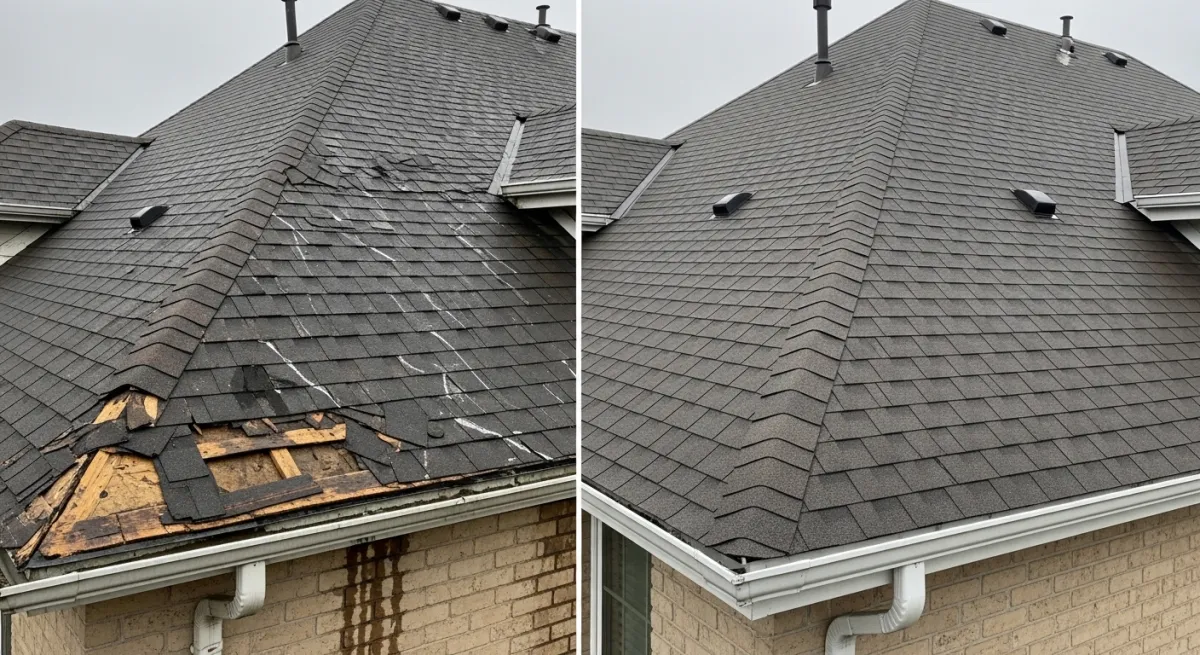
When a Roof Repair Is the Right Choice
Repairs are appropriate when damage is isolated and the rest of the roof system is in good condition. Common scenarios where repair is the better call:
- Isolated wind damage on a young roof. A few missing or torn shingles after a storm, on a roof less than 10–15 years old, can almost always be repaired for $200–$800.
- A single leak around flashing. Leaks around a chimney, vent pipe, or skylight are typically a flashing problem, not a roof-wide failure. Replacement of the flashing usually runs $300–$1,200.
- A localized hail impact area. If hail damaged only one slope or a small section, that section can sometimes be reroofed without touching the rest of the surface.
- A damaged valley. Valley metal can be replaced and the surrounding shingles re-laid for $500–$1,500 in most cases.
- Minor decking issue at one penetration. A localized soft spot can be cut out and replaced without disturbing the rest of the roof.
If your roof is in this category, a repair will typically extend its useful life by 5–15 years and is the much more economical choice. A licensed contractor can confirm during a free inspection whether your situation fits.
When a Full Roof Replacement Is the Right Choice
Full replacement becomes the better long-term investment when one or more of the following conditions apply:
- The roof is past 75% of its expected lifespan. Asphalt at 18+ years, metal at 30+ years, tile at 40+ years. Repair costs at this stage usually don't justify the remaining lifespan.
- Widespread shingle failure. When more than 25–30% of shingles are curling, cracking, missing, or losing granules, individual repairs no longer make economic sense.
- Multiple leaks in different areas. Leaks in two or more separate areas usually mean the underlayment has failed across the surface, not just at one penetration.
- Sagging roof deck. Sagging indicates the wood structure underneath has absorbed moisture and softened. This requires full tear-off, deck replacement, and reroof.
- Storm damage exceeds repair threshold. Most insurance carriers will approve full replacement when documented storm damage affects more than about 25% of the roof surface, because repairing damaged shingles next to undamaged ones leaves visible patches and color mismatch.
- Granule loss filling gutters. Heavy granule loss is a sign the asphalt mat has lost its UV protection and the shingles are at end of life.
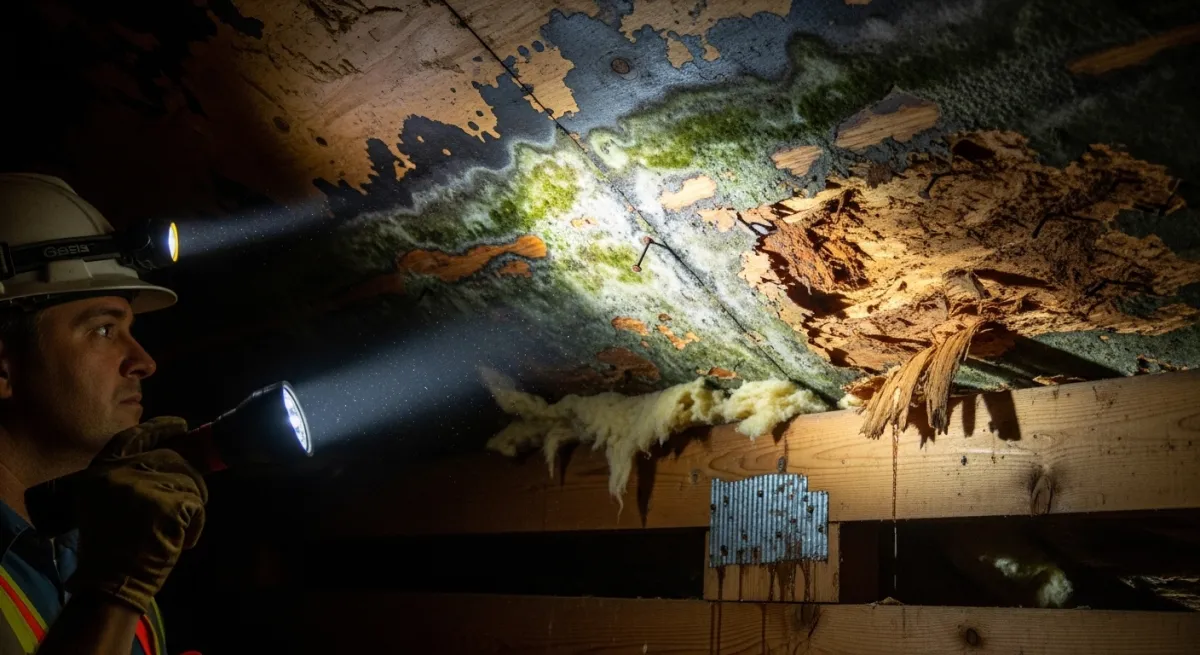
- Visible mold or rot in the attic. Sustained moisture has reached the structural elements and the roof system needs to be torn off and rebuilt.
- Daylight visible through attic boards. Indicates failed decking or shingle integrity that can't be addressed with a patch.
If you're seeing any of these conditions, a written inspection will confirm the scope and tell you whether replacement is the right call. Call (888) 217-6517 for a free assessment.
Schedule a Free Roof Inspection
(888) 217-6517Free Written Assessment · Licensed Inspectors · No Pressure

Cost Comparison: Repair vs Replacement
Here's the typical 2026 cost range for both options on a 2,000 sq ft asphalt shingle roof:
| Project | Typical Cost | Useful Life Added |
|---|---|---|
| Replace 1–10 missing shingles | $150–$500 | Variable (depends on roof age) |
| Repair flashing around chimney or skylight | $300–$1,200 | 5–15 years |
| Patch leak around vent pipe | $200–$600 | 5–10 years |
| Replace damaged valley metal | $500–$1,500 | 10–20 years |
| Section reroof (one slope) | $1,500–$5,000 | 15–25 years (on that section) |
| Full architectural asphalt replacement (2,000 sq ft) | $11,000–$17,000 | 25–30 years |
| Full standing seam metal replacement | $24,000–$40,000 | 50–70 years |
The math typically favors repair on younger roofs with isolated problems and replacement on older roofs with widespread issues. The break-even point is usually around year 15 for asphalt and year 30 for metal — past that, the cost-per-year of remaining life starts to favor replacement.
What an Inspection Should Look At
A thorough roof inspection covers six areas. The findings in each area inform the repair-vs-replacement recommendation:
- Shingle surface condition. Curling, cracking, blistering, granule loss, missing shingles, exposed nails.
- Flashing. Around chimneys, skylights, vent pipes, walls, and valleys. Rust, lifting, missing sealant.
- Roof penetrations. Vent boots, pipe collars, satellite dish mounts. Cracking and seal failure are common.
- Valleys. Where two roof slopes meet — high water flow, prone to wear and ice dam damage.
- Decking and underlayment. Inspected from inside the attic — soft spots, water stains, daylight, mold, rot.
- Ventilation. Ridge vent, soffit vents, gable vents. Inadequate ventilation shortens roof lifespan and voids many manufacturer warranties.
A written inspection report should include photos of each area, specific findings, a recommended scope of work, and an itemized estimate. Verbal inspections without photos are a red flag.
How Insurance Affects the Decision
If your roof has storm damage from hail, wind, or a fallen tree, your homeowners insurance may cover replacement even when a repair would technically be possible. Most carriers approve full replacement when storm damage affects more than about 25% of the roof surface, or when a partial repair would leave visible color mismatch with the surrounding shingles. Filing a storm claim within the policy deadline (often 1 year from the date of damage) is important. See our roof insurance claims guide for the full process.
Get a Free Inspection and Honest Recommendation
(888) 217-6517Licensed Inspectors · Written Assessment · No Pressure
Get a Written Inspection and Recommendation
The right answer to "repair or replace" depends on what an inspector actually finds on your roof — not what an algorithm or a sales pitch tells you. Our licensed contractors provide free written inspections that document the condition of your shingles, flashing, decking, and ventilation, with photos and a clear recommendation. If a repair will hold, we'll tell you. If replacement is the better long-term investment, we'll explain why with the numbers behind the decision.
Call (888) 217-6517 to schedule a free inspection.
"They told us our roof had another 5 years left and recommended a $600 flashing repair instead of a full replacement. Honest assessment saved us thousands." — Diane S., Portland, OR
Schedule Your Free Inspection
(888) 217-6517Honest Recommendations · Licensed Contractors · No Pressure
Repair vs Replacement FAQ
How do I know if my roof needs to be replaced or just repaired?
Repair usually makes sense when damage is isolated, the roof is less than two-thirds of the way through its expected lifespan, and the underlayment and decking are intact. Replacement is usually the better call when the roof is past 75% of its lifespan, has multiple leaks, shows widespread granule loss, or has sagging or rotted decking. A written inspection from a licensed roofer is the only reliable way to know for sure. Call (888) 217-6517 for a free, no-obligation inspection.
When is a roof repair the right choice?
Repairs are appropriate for younger roofs (less than 10–15 years old for asphalt) with isolated damage like a missing shingle, a localized leak around a flashing, a hail strike on one slope, or a single damaged valley. If the rest of the roof is in good shape, a $300–$1,500 repair can extend its life by years and is much more cost-effective than full replacement.
What happens during a roof replacement?
Crews remove the entire existing roofing system down to the deck, inspect and replace any damaged plywood, install new ice and water shield in valleys and along eaves, lay new synthetic underlayment, install new flashing around penetrations, apply the new roofing material, and complete a final cleanup with magnetic sweep for nails. Most projects finish in 1–3 days. Call (888) 217-6517 for a free written estimate.