Average Roof Replacement Cost in 2026
Across the United States, a full roof replacement typically costs between $5,500 and $50,000. Most homeowners with a 2,000 sq ft home and architectural asphalt shingles spend $11,000–$17,000. The national average for an asphalt reroof is around $9,500–$15,000, while premium materials like clay tile, slate, or copper push the total much higher.
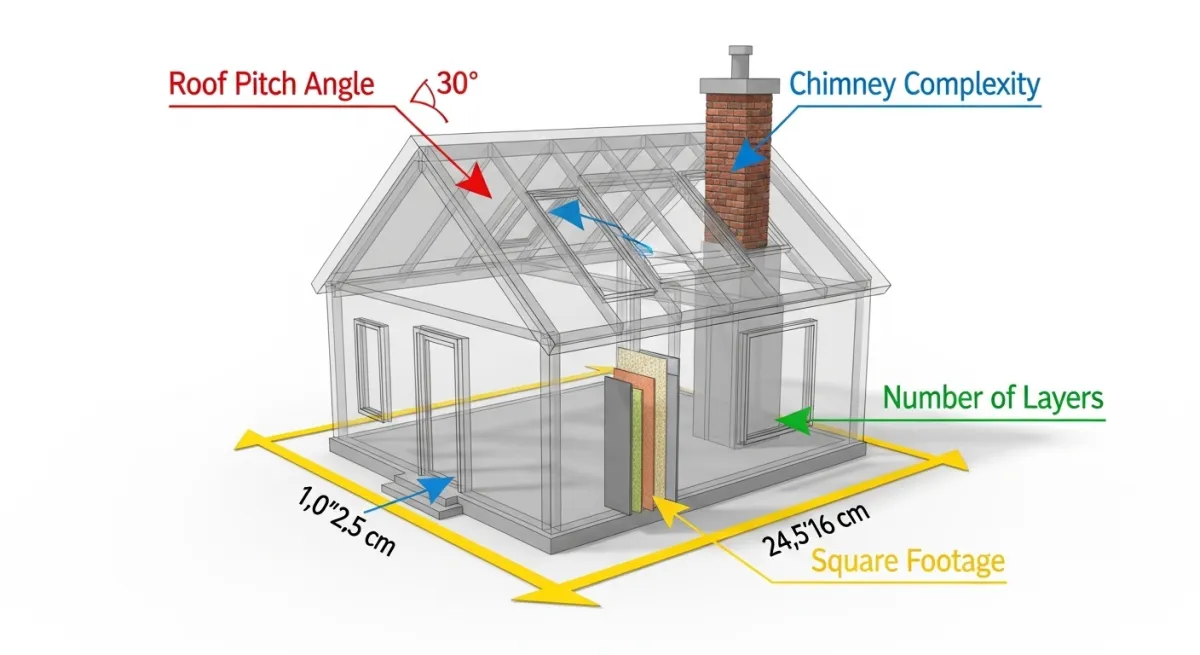
Your specific cost depends on five main factors: the roofing material you choose, the size of the roof, the pitch and complexity, the condition of the decking underneath, and your region's labor rates. The sections below break down each of these so you can build a realistic budget before calling for a written estimate.

Roof Replacement Cost by Material (2026 Pricing)
Material is the single largest line item in a roof replacement quote. Below is a breakdown of typical 2026 installed pricing — material plus labor — for the most common residential roofing systems on a 2,000 sq ft home with average pitch and complexity.
| Material | Cost per sq ft (installed) | Total for 2,000 sq ft | Lifespan |
|---|---|---|---|
| 3-tab asphalt shingle | $4.50–$6.50 | $9,000–$13,000 | 15–20 years |
| Architectural asphalt shingle | $5.50–$8.50 | $11,000–$17,000 | 25–30 years |
| Premium designer asphalt | $8.00–$12.00 | $16,000–$24,000 | 30–50 years |
| Corrugated steel | $9.00–$14.00 | $18,000–$28,000 | 40–60 years |
| Standing seam metal | $12.00–$20.00 | $24,000–$40,000 | 50–70 years |
| Stone-coated steel | $10.00–$16.00 | $20,000–$32,000 | 40–60 years |
| Concrete tile | $10.00–$18.00 | $20,000–$36,000 | 50–75 years |
| Clay tile | $14.00–$25.00 | $28,000–$50,000 | 75–100 years |
| Natural slate | $20.00–$40.00 | $40,000–$80,000 | 75–150 years |
| TPO/EPDM (flat roof) | $7.00–$12.00 | $14,000–$24,000 | 20–30 years |
These ranges assume average pitch (4/12–6/12), single-layer tear-off, and standard complexity. Steeper pitches, multiple tear-off layers, complex layouts, and decking repairs add to the total. Regional labor rates can shift the numbers up or down by 10–30%.
"Detailed line-by-line quote with all the materials spelled out. No surprises later." — James D., Atlanta, GA
What's Included in a Roof Replacement Quote
A typical full roof replacement budget breaks down roughly like this:
- Materials (40–50%) — shingles, underlayment, ice and water shield, drip edge, flashing, ridge vent, ridge cap, fasteners, sealant.
- Labor (30–40%) — tear-off crew, install crew, foreman, on-site supervision.
- Tear-off and disposal (10–15%) — removing old shingles, dumpster rental, landfill or recycling fees.
- Permits and inspections (2–5%) — local building permit ($150–$500 typical), final inspection.
- Decking, ventilation, and structural repairs (5–10%) — replacement plywood ($70–$120 per 4×8 sheet), new vents, fascia repair, chimney flashing.
If a quote is significantly cheaper than others, check what's missing. Common omissions include drip edge, ice and water shield, starter strips, ridge cap, ridge vent upgrades, and decking allowances. These items show up as change orders later when the work is already underway.
Cost Factors That Change Your Quote
Beyond the material itself, several variables determine where your final number lands within the ranges above.
Roof Size (Squares)
Roofers measure in squares, where 1 square = 100 sq ft. A typical American home has 17–22 squares of roof. Larger homes need more material and labor, but per-square cost usually drops slightly on bigger projects because of fixed setup costs.
Roof Pitch
A 4/12 pitch is considered standard. Anything steeper than 6/12 typically adds 20–50% in labor because the crew needs roof jacks, harnesses, and slower foot placement. Anything steeper than 9/12 usually requires scaffolding and adds even more.
Tear-Off Layers
A single-layer tear-off is the baseline. If your home has two or three layers of old shingles stacked up, expect an additional $1–$2 per sq ft for the extra removal labor and dumpster weight. Many municipalities prohibit installing over more than one existing layer.
Decking Repairs
If the inspection reveals rotted or soft plywood underneath the old shingles, those sheets need replacement before the new roof goes on. Expect $70–$120 per 4×8 sheet of new sheathing, installed. A typical project replaces 2–10 sheets.
Roof Complexity
Skylights, chimneys, multiple valleys, dormers, and complex hip-and-valley layouts add labor and flashing material. A simple gable roof is the cheapest layout to reroof. A cut-up Victorian with multiple dormers and a steep pitch can cost 40–60% more per square foot than a comparable gable.
Permits and Code Requirements
Most municipalities require a building permit for roof replacement, typically costing $150–$500. Coastal and high-wind areas often require upgraded fastener patterns and sometimes specific underlayment products that meet local codes.
Time of Year
Roofing demand peaks late spring through early fall. Winter installations (in regions where weather permits) sometimes come with discounts of 5–15% because crews have more availability. After major hailstorms, demand spikes and prices may rise temporarily as supply tightens.
Regional Roof Replacement Cost Ranges
Labor rates and material costs vary significantly across the United States. The ranges below are for a 2,000 sq ft architectural asphalt shingle roof at 4/12 pitch with single-layer tear-off and minor decking repairs.
| Region | Typical Range (2,000 sq ft, architectural asphalt) |
|---|---|
| Northeast (NY, MA, NJ, CT, PA) | $14,000–$20,000 |
| Mid-Atlantic (VA, MD, DC, DE) | $12,000–$18,000 |
| Southeast (FL, GA, NC, SC, TN) | $10,000–$15,000 |
| Midwest (OH, IL, MI, IN, MO) | $11,000–$16,000 |
| Plains (KS, NE, IA, MN, SD, ND) | $10,000–$15,000 |
| Southwest (TX, AZ, NM, OK) | $11,000–$17,000 |
| Mountain West (CO, UT, NV, ID, MT, WY) | $12,000–$18,000 |
| West Coast (CA, OR, WA) | $14,000–$22,000 |
Coastal areas with hurricane or high-wind code requirements typically run at the higher end of these ranges due to upgraded fasteners, hurricane straps, and impact-resistant material requirements.

Will Insurance Cover Your Roof Replacement?
Homeowners insurance typically covers roof replacement when damage comes from a covered peril — hail, wind, fallen trees, or fire. Age-related wear and lack of maintenance are generally not covered. After a storm event, the typical claim process looks like this:
- Document visible damage with timestamped photos as soon as it's safe to do so.
- File the claim with your insurance carrier within the deadline specified in your policy (often 1 year, but check yours).
- Get a written inspection report from a licensed roofer before the adjuster visit.
- Meet the adjuster at the property with your documentation.
- If the claim is approved, you pay your deductible and the carrier pays the rest, typically in two installments (initial payment and a depreciation release after the work is complete).
For a full walkthrough of the process, see our roof replacement insurance claims guide, or call (888) 217-6517 for help documenting damage before the adjuster arrives.
Roof Replacement Financing Options
Most homeowners finance at least part of a roof replacement. Common options include:
- Contractor financing — 12 to 84 month terms, often with same-day approval. Some lenders offer 0% intro APR for 12–18 months for qualified borrowers.
- Home equity loan or HELOC — Typically the lowest interest rate for large projects ($15,000+) because the loan is secured by your home.
- Personal loan — Unsecured, faster than HELOCs, higher rates (typically 9–18% APR). Good option if you don't want to use home equity.
- Insurance proceeds — When storm damage caused the failure, the insurance payout typically covers most of the replacement cost minus your deductible.
See our roof replacement financing page for current options, or call (888) 217-6517 to discuss what fits your situation.
How to Compare Roof Replacement Quotes
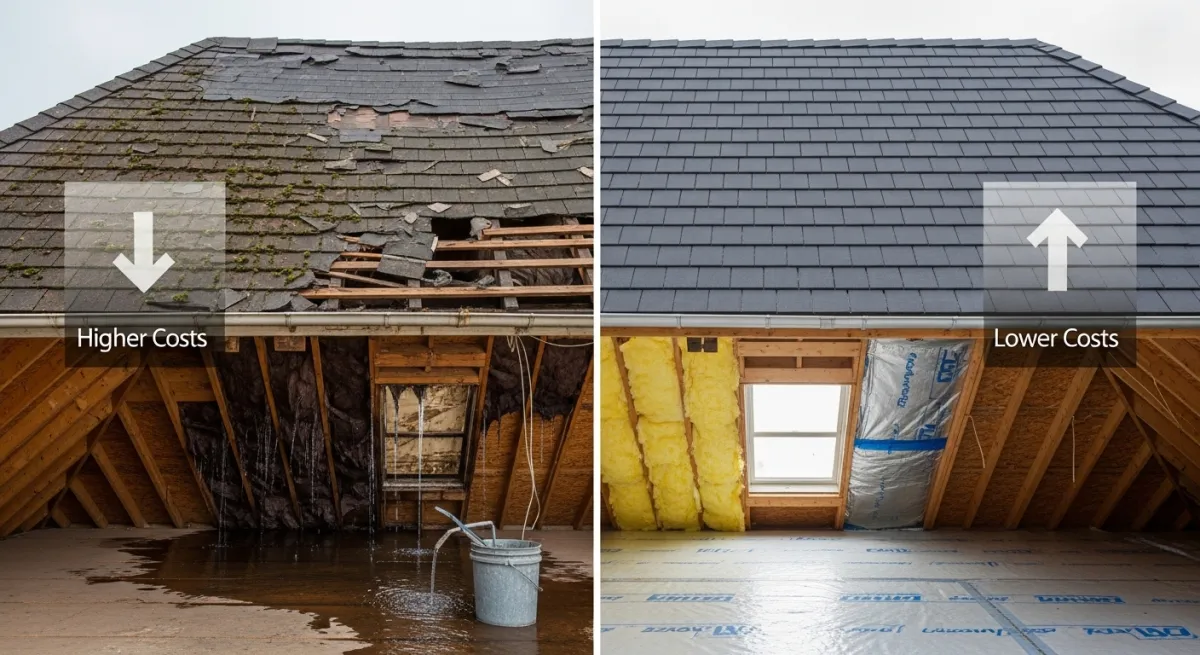
Getting two or three written estimates is the standard recommendation, and it usually pays off. When comparing quotes, look beyond the bottom-line number and check the following items in each proposal:
- Scope of work — Is it a complete tear-off, or a layover? Are starter strips, ridge caps, and ridge vent included?
- Material specifications — Exact brand, product line, and color spelled out, not just "30-year shingles."
- Underlayment and ice & water shield — Synthetic underlayment over the full roof; ice and water shield in valleys, around penetrations, and along eaves in cold climates.
- Decking allowance — How many sheets of replacement decking are included before change orders kick in?
- Warranty — Manufacturer material warranty (typically 25–50 years) and a separate workmanship warranty in writing (typically 5–25 years depending on contractor).
- Insurance and licensing — Proof of state license, general liability insurance, and workers' compensation coverage.
- Timeline and payment schedule — Specific start date and milestone payment terms in writing.
The cheapest quote isn't always the best value. A bid that's 25% lower than the others usually means something important was left out. Call (888) 217-6517 for a free written estimate that itemizes every line so you can compare apples to apples.
Roof Replacement Cost FAQ
How much does a full roof replacement cost in 2026?
For a 2,000 sq ft home, architectural asphalt shingle replacement typically runs $11,000–$17,000. Standing seam metal runs $24,000–$40,000. Concrete tile runs $20,000–$36,000, and clay tile $28,000–$50,000. The national average for a full asphalt reroof is around $9,500–$15,000. Your specific number depends on roof size, pitch, decking condition, and your region's labor rates. Call (888) 217-6517 for a free written estimate.
How is roof replacement priced — per square foot or per square?
Roofers price by the "square," which equals 100 square feet. A 2,000 sq ft roof is 20 squares. Per-square pricing typically runs $450–$650 for 3-tab asphalt, $550–$850 for architectural asphalt, $900–$1,400 for corrugated metal, $1,200–$2,000 for standing seam metal, and $1,000–$1,800 for concrete tile. Most contractors quote by total project cost, which includes materials, labor, tear-off, disposal, underlayment, flashing, and permits.
What is included in a roof replacement quote?
A complete written estimate should include: tear-off and disposal of the old roof, replacement of damaged decking (typically priced separately at $70–$120 per 4×8 sheet), new ice and water shield in valleys and along eaves, new synthetic underlayment, new drip edge and step flashing, the roofing material itself, ridge vents and ventilation, ridge cap shingles, permits, and a written workmanship warranty. Anything missing from the quote will likely show up as a change order later.
Does insurance cover the cost of a new roof?
Homeowners insurance typically covers roof replacement when damage comes from a covered peril like hail, wind, fallen trees, or fire. Age-related wear is generally not covered. If you have storm damage, file the claim quickly, document everything with photos, and get a written inspection from a licensed contractor before the adjuster arrives. See our roof insurance claims guide for details.
Can I finance a roof replacement?
Yes. Most contractors offer 12–84 month financing with rates ranging from 0% intro APR (for shorter terms with qualified credit) to 9–15% for longer terms. Home equity loans and HELOCs typically offer the lowest rates for large projects. Personal loans are an option if you prefer not to use your home as collateral. See our roof replacement financing page for current options.
Get Your Free Written Estimate
(888) 217-6517Licensed & Insured · Itemized Quote · Financing Available
"Three quotes in writing made the comparison easy. The detailed itemization gave us confidence we were getting full value." — Patricia W., Denver, CO