Flat Roof Replacement Overview
"Flat" roofs aren't actually flat — they're built with a minimum 1/4 inch per foot slope to direct water toward drains, scuppers, or gutters. This low-slope design uses different materials and installation methods than pitched roofs. Modern flat roofs use single-ply membrane systems that create a continuous waterproof barrier across the roof surface. The four most common residential flat roof systems are:
- TPO (Thermoplastic Polyolefin) — the most popular new flat roof material in North America. Heat-welded seams, white reflective surface for energy efficiency, 20–30 year lifespan.
- EPDM (Ethylene Propylene Diene Monomer) — synthetic rubber membrane with 50+ years of field history. Available in large sheets to minimize seams, excellent cold-weather flexibility, 20–30 year lifespan.
- PVC (Polyvinyl Chloride) — premium single-ply membrane with hot-air welded seams. Excellent chemical, grease, and fire resistance. 25–35 year lifespan.
- Modified bitumen — overlapping sheets of polymer-modified bitumen, often torch-applied. Good foot-traffic resistance, 15–25 year lifespan.
A full flat roof replacement strips the existing roof to the structural deck and installs a new system from scratch — insulation, membrane, flashings, and drainage components. Call (888) 217-6517 for a free written estimate from a certified flat roof contractor.
Get a Free Flat Roof Estimate
(888) 217-6517Certified Flat Roof Specialists · Free Written Quote · Workmanship Warranty
5 Common Causes of Flat Roof Failure
Roughly 90% of premature flat roof failures trace back to five preventable causes. Knowing what to look for helps you decide whether replacement is needed and what to specify in the new installation.
1. Ponding Water
Standing water that remains more than 48 hours after rain stresses the membrane, accelerates UV and chemical degradation, adds weight to the structure, and creates conditions for biological growth. The root cause is usually inadequate drainage slope or undersized/clogged drains. The fix during replacement is tapered insulation that engineers proper slope toward drains and scuppers.
2. Membrane Punctures
HVAC technicians, satellite installers, and maintenance crews walk on flat roofs regularly. Without protective walk pads, foot traffic can puncture the membrane and create leak points. Walk pads and a documented rooftop traffic policy reduce this risk.
3. Failed Seams
Seams are the most common location for flat roof leaks. Properly heat-welded TPO and PVC seams should be stronger than the membrane itself. EPDM seams use seam tape or adhesive. Failed seams typically come from improper welding temperature, contaminated bonding surfaces, or rushed installation. Certified installation is the best protection against premature seam failure.
4. Neglected Maintenance
Debris that accumulates on the roof can clog drains and trap moisture. Semi-annual inspections, drain clearing, and prompt repair of small punctures or seam separations significantly extend roof life. Most flat roofs that fail in 10–15 years (rather than 20–30) had little or no maintenance.
5. UV Degradation
UV radiation breaks down membrane compounds over time, especially on dark EPDM and modified bitumen. Reflective coatings help but need periodic reapplication. White TPO and PVC are more UV-resistant by default and reflect heat to reduce energy costs.
If your flat roof shows any of these issues, a written inspection from a flat roof specialist will tell you whether targeted repairs will hold or whether full replacement is the better long-term investment. Call (888) 217-6517 for a free assessment.
Flat Roof Replacement Materials Compared
Each flat roof material has trade-offs in cost, lifespan, energy performance, and best-fit applications.
TPO (Thermoplastic Polyolefin). The most common new flat roof installation. Heat-welded seams create a continuous waterproof surface. The reflective white surface can reduce cooling costs by 10–25% in hot climates. Available in 45-, 60-, and 80-mil thicknesses. Lifespan: 20–30 years.
EPDM (Ethylene Propylene Diene Monomer). Synthetic rubber membrane with 50+ years of field-proven performance. Available in sheets up to 50 feet wide, which means fewer seams on larger roofs. Excellent cold-weather flexibility and ozone resistance. Lifespan: 20–30 years. Best for larger flat roof installations and cold climates.
PVC (Polyvinyl Chloride). Premium single-ply membrane with hot-air welded seams that are typically stronger than the membrane itself. Excellent chemical, grease, and fire resistance. Lifespan: 25–35 years. Best for homes near restaurant exhaust, rooftop gardens, or any application requiring premium chemical resistance.
Modified Bitumen. Overlapping sheets of polymer-modified asphalt, applied with heat or adhesive. Provides redundant waterproofing layers and good foot-traffic resistance. Lifespan: 15–25 years.
Built-Up Roofing (BUR). Multiple layers of bitumen and reinforcing fabrics topped with gravel. The traditional flat roofing method, largely replaced by single-ply membranes for new installations but still offers excellent redundancy. Lifespan: 15–30 years.
Call (888) 217-6517 for a free recommendation based on your specific roof, climate, and budget.
Talk to a Certified Flat Roof Installer
(888) 217-6517Free Assessment · TPO/PVC/EPDM Specialists · No Obligation
"They identified a drainage issue with the original installation and corrected it with tapered insulation during the replacement. No leaks since." — James K., Phoenix
Flat Roof Replacement Cost
For a 2,000 sq ft flat roof, full replacement typically runs:
- TPO (60-mil): $14,000–$22,000 ($7–$11 per sq ft installed)
- EPDM (60-mil): $12,000–$20,000 ($6–$10 per sq ft installed)
- PVC (60-mil): $16,000–$26,000 ($8–$13 per sq ft installed)
- Modified bitumen: $14,000–$22,000 ($7–$11 per sq ft installed)
- Built-up roofing: $16,000–$26,000 ($8–$13 per sq ft installed)
The biggest cost variables beyond the membrane itself are insulation (current energy codes often require R-30 or higher, which means 4–6 inches of rigid polyiso board), drainage modifications (tapered insulation systems, additional drains, scupper modifications), the number of roof penetrations (HVAC units, pipes, skylights), and removal of any saturated existing insulation.
See our roof replacement cost guide for a full breakdown by material and region, or call (888) 217-6517 for a free written estimate that includes the drainage assessment.
Signs Your Flat Roof May Need Replacement
An inspection is the only way to know for sure, but the following signs typically indicate that full replacement is the right call:
- Persistent ponding water that doesn't drain within 48 hours of rain.
- Visible membrane damage — bubbles, cracks, splits, or shrinkage.
- Failed or separating seams — common on roofs over 15 years old or with poor original installation.
- Active interior leaks — water stains on ceilings, especially after heavy rain.
- Saturated insulation — soft or spongy areas when walked on, indicating moisture has reached the insulation.
- Roof age past 20 years for TPO/EPDM, 25 years for PVC, or 15 years for modified bitumen.
- Multiple repair visits over the past few years — when cumulative repair cost approaches a third of replacement cost, replacement is usually the better long-term value.
Call (888) 217-6517 for a free written inspection.
Schedule a Free Flat Roof Inspection
(888) 217-6517Certified Specialists · Free Written Report · No Obligation
"Detailed inspection and clear written estimate. The drainage modifications they recommended made a big difference." — Patricia H., Houston
Pros and Cons of Flat Roof Replacement
Advantages
- Lower cost per square foot than most pitched roof systems for similar coverage.
- Usable rooftop space — HVAC equipment, solar arrays, rooftop decks, or garden space become possible.
- Easier maintenance access — flat roofs can be walked on for inspections and equipment servicing without specialized safety equipment.
- Energy efficiency — white TPO and PVC reflect 70–90% of solar energy, reducing cooling costs significantly in hot climates.
- Modern aesthetic — clean horizontal lines complement contemporary residential architecture.
Trade-offs
- Drainage is critical — water doesn't shed naturally on flat surfaces, so proper slope and drain design are essential.
- Shorter lifespan than metal or tile — 20–35 years vs 40–70 for metal and 50–100 for tile.
- Maintenance requirements — semi-annual inspections and drain clearing significantly affect lifespan.
- Foot traffic vulnerability — unprotected membrane can be punctured by equipment or careless workers; walk pads are recommended.
- Specialist installation — flat roofing requires different expertise from pitched roof work, and not all contractors are certified for membrane systems.
Flat Roof Replacement Process
Flat roof replacement requires different expertise from pitched roof work — drainage engineering, seam welding, and detail flashing all require certified crews who specialize in membrane systems. A typical project follows the same six steps from initial inspection through final flood testing.
Roof and Drainage Inspection
A licensed inspector evaluates the existing membrane, flashings, drains, and parapet walls. The inspection maps any drainage issues, ponding zones, and seam failures. Findings are documented with photos in a written report.
System Recommendation and Written Estimate
You receive an itemized written estimate covering membrane, insulation, drainage modifications, flashing, labor, permits, and warranty terms. The recommendation is based on your home, climate, and budget.
Tear-Off and Substrate Restoration
The crew removes the existing membrane and any saturated insulation down to the structural deck, replaces damaged decking, engineers proper drainage slope using tapered insulation, and installs rigid insulation board to current code R-value requirements.
Membrane Installation
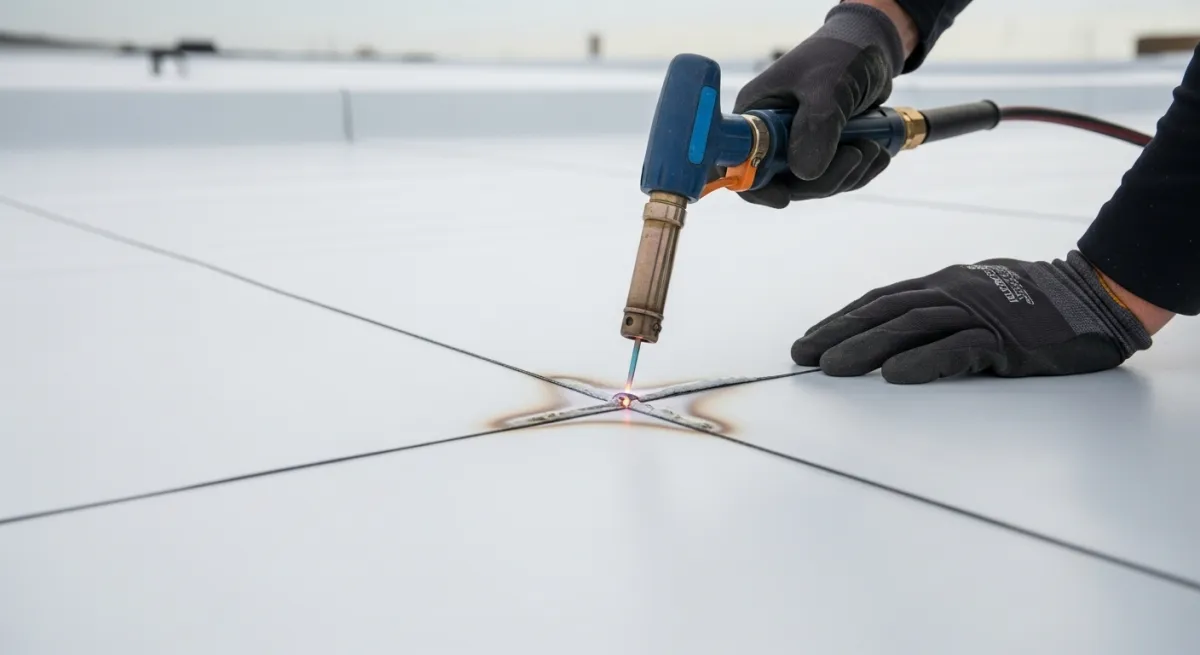
Certified crews install the new membrane — hot-air welded seams for TPO and PVC, adhesive or ballasted for EPDM, torch-applied for modified bitumen. Each seam is tested for watertight integrity before moving on.
Flashing, Penetrations, and Drainage
Crews detail all perimeter flashings, parapet terminations, pipe penetrations, HVAC curbs, and drain assemblies with welded or sealed connections. Detail work at transitions is the most common location for flat roof leaks, so this step is critical.
Final Inspection and Warranty Activation
A final inspection includes flood testing of every drain and visual verification of every seam and flashing. Manufacturer warranty registration and the written workmanship warranty are completed before the crew leaves.
Flat Roof Replacement FAQ
How long does a flat roof last?
TPO and EPDM roofs typically last 20 to 30 years. PVC roofs last 25 to 35 years. Modified bitumen systems last 15 to 25 years. Built-up roofing (BUR) lasts 15 to 30 years. Lifespan depends heavily on installation quality, drainage design, and routine maintenance. Ponding water that sits more than 48 hours is the primary cause of premature failure. Call (888) 217-6517 for a free written estimate.
What is the best flat roofing material?
The right choice depends on your home, climate, and budget. TPO is the most popular for new installations because it offers strong energy efficiency (white reflective surface), heat-welded seams, and competitive pricing. PVC is the premium choice for chemical and grease resistance. EPDM is the most economical option for larger flat roofs and has 50+ years of field-proven performance. A licensed contractor can recommend the right system after inspecting your roof. Call (888) 217-6517 for a free consultation.
Do flat roofs leak more than sloped roofs?
Not when properly designed and installed. Modern single-ply membranes (TPO, PVC, EPDM) create fully welded or adhered waterproof barriers that perform very well. The most common cause of flat roof leaks is poor drainage design (slope less than 1/4 inch per foot, undersized or missing drains, clogged drains) rather than the membrane material itself. Proper drainage and routine maintenance are the keys to long-term performance.
Why do flat roofs fail prematurely?
The five most common causes are: (1) ponding water from inadequate drainage, (2) membrane punctures from foot traffic without walk pads, (3) failed seams from improper welding, (4) neglected maintenance allowing debris to clog drains, and (5) UV degradation from missing or expired protective coatings. All of these are preventable with proper installation and routine maintenance. Call (888) 217-6517 for a free flat roof assessment.
Get a Free Flat Roof Estimate
(888) 217-6517Certified Flat Roof Experts · Free Written Quote · Workmanship Warranty
"Knowledgeable about drainage design, quick to respond to questions, clean install. No leaks since." — Tom S., Chicago