Get a Free Storm Damage Inspection
(888) 217-651724/7 Emergency Response · Same-Day Tarping · Insurance Documentation
What to Do After Storm Damage
After a hailstorm, high wind event, or fallen tree, the first priority is to prevent additional damage to the home interior while documenting what happened for the insurance claim. Here is the general sequence most homeowners should follow:
- Document the damage with photos. As soon as it's safe, take photos of any visible damage from the ground, the yard, and inside the attic. Timestamped photos help support the insurance claim.
- Secure the home interior. If there's active leaking, place buckets under the leaks and move furniture or valuables out of the affected area.
- Call a licensed roofer for an inspection. A professional inspection documents damage that isn't visible from the ground and produces a written report you can submit with the claim.
- File the insurance claim. Most policies require storm damage claims to be filed within 1 year of the date of damage. Filing quickly preserves your options.
- Schedule emergency tarping if needed. If decking is exposed or there are active leaks, tarping prevents further interior damage while the claim is processed.
Call (888) 217-6517 for a free storm damage inspection and written report.
Schedule a Free Storm Damage Inspection
(888) 217-6517Same-Day Inspections · Photo Documentation · Free Written Report
Common Signs of Storm Damage to Your Roof
Some types of storm damage are visible from the ground; others require an up-close inspection. The following are the most common findings on storm-damaged residential roofs:
- Missing or displaced shingles. High winds can break the seal between shingle courses and lift, fold, or tear shingles off entirely. Even a few missing shingles create entry points for water.
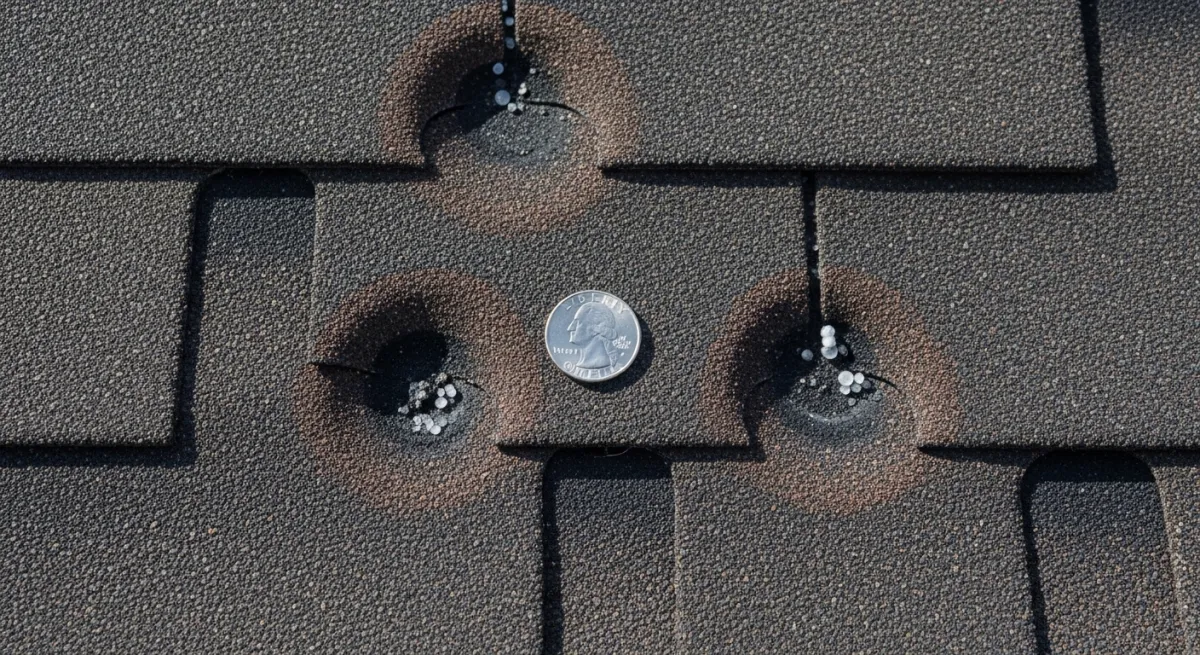
- Hail bruising. Hailstones leave circular impact marks that crack the shingle mat and dislodge granules. The damage often isn't visible from the ground but accelerates UV degradation and shortens shingle life.
- Cracked or shattered tiles. Clay and concrete tiles can crack from hail and falling debris, breaking the waterproof seal of the roof system at that location.
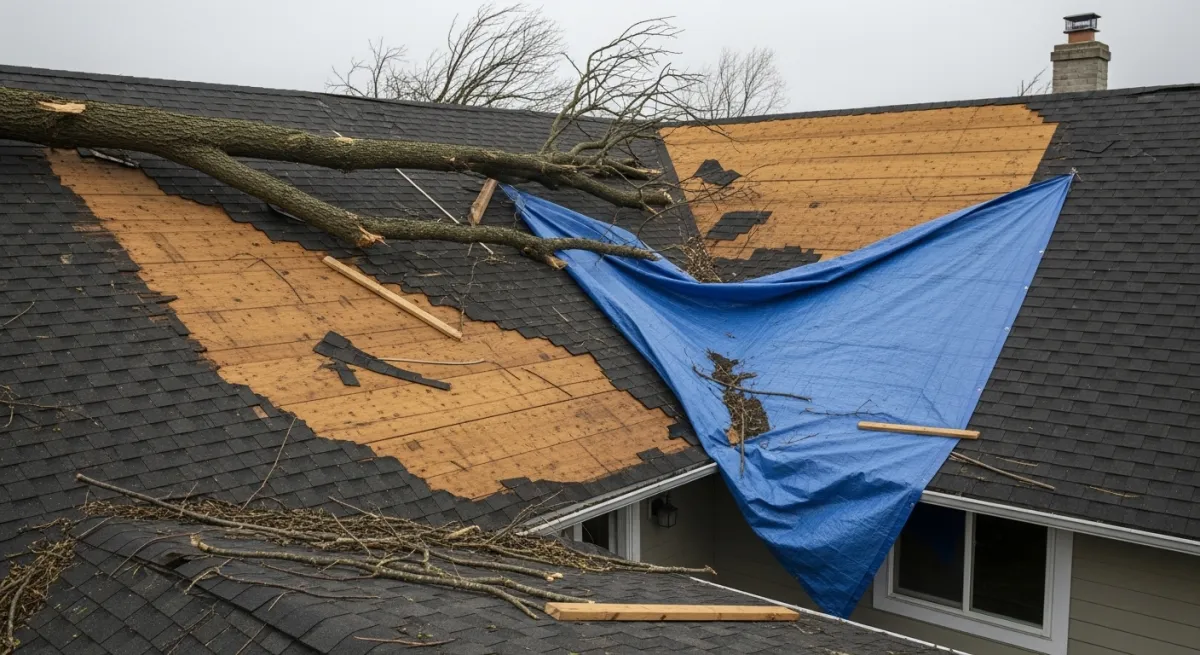
- Exposed underlayment or decking. Where shingles have been torn away, the underlayment and decking are exposed to UV and weather and degrade quickly.
- Granule loss. Heavy granule loss in gutters and downspouts after a hailstorm indicates impact damage to the shingle surface.
- Interior water stains and active leaks. Water stains on ceilings or walls usually indicate the underlayment has been breached.
- Bent or torn flashing. Metal flashing around chimneys, vents, and skylights can be lifted or bent by high winds and is a common source of post-storm leaks.
For safety, do not climb onto your own roof to inspect storm damage — wet or damaged surfaces are dangerous and the damage is best documented by a trained inspector. Call (888) 217-6517 for a free professional inspection with photo documentation.
Get a Free Storm Damage Inspection
(888) 217-6517Same-Day Inspections · Photo Documentation · Insurance Reports
Hail Damage Roof Replacement
Hail is one of the most common causes of insurance-covered roof replacement in the United States. Hail damage varies by roofing material:
- Asphalt shingles show circular bruises where the granule layer has been displaced, exposing the asphalt mat to UV degradation.
- Metal roofing shows dents and may have damage to the protective coating, which can lead to corrosion at the impact points.
- Tile roofs can crack from larger hailstones, breaking the waterproof seal at the affected tiles.
- Wood shakes can split from hail impact, creating direct paths for water infiltration.
Most insurance carriers approve full roof replacement when documented hail damage exceeds about 25% of the roof surface, or when partial repair would leave visible color mismatch. A professional inspection using industry-standard chalk circle testing and forensic photography documents each impact point for the claim. Call (888) 217-6517 for a free hail damage inspection.
"The inspector documented every hail impact and the insurance approved the full replacement. We paid only the deductible." — Tom R., San Antonio, TX
Free Hail Damage Inspection
(888) 217-6517Forensic Documentation · Insurance Claim Support · Free Written Report
Wind Damage Roof Replacement
Thunderstorms, hurricanes, tornadoes, and derechos can cause significant wind damage to residential roofs. Once the seal strip adhesive between shingle courses is broken, even moderate winds can lift, fold, and tear shingles off in subsequent storms.
Common wind damage includes lifted or peeled shingles, torn flashing around penetrations, debris impact from tree limbs and airborne objects, and decking damage at sections where shingles have been completely removed. After significant wind events, emergency tarping is often necessary to prevent interior damage while the insurance claim is processed and materials are ordered.
Call (888) 217-6517 for emergency tarping or a wind damage inspection.
Storm Damage Roof Replacement Process
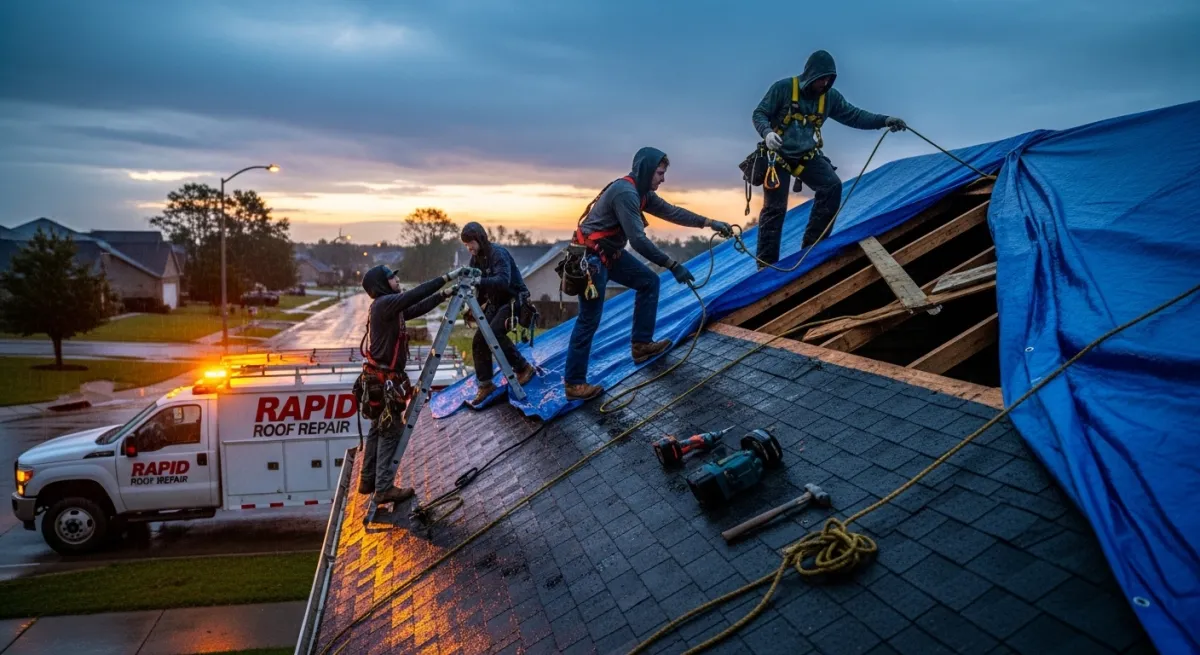
From the initial emergency call through the completed roof replacement, the typical storm damage project follows the same five steps. Most projects move from emergency response to completed replacement within two to four weeks, depending on insurance approval timing and material availability.
Initial Call
After storm damage, call to schedule an inspection or request emergency tarping if there is active leaking. Our 24/7 dispatch gathers details about the damage and dispatches the closest available crew.
Emergency Tarping (if needed)
If there is active leaking or exposed decking, the emergency crew installs heavy-duty tarps to prevent further interior damage while the inspection and insurance process moves forward. Tarping is typically completed within hours of the call.
Documented Inspection
A licensed inspector documents the damage with photographs, drone imagery where useful, and a written report. The inspection covers shingles, flashing, ventilation, decking, and gutters. The written report supports the insurance claim and informs the scope of work.
Insurance Claim Support
We provide an itemized damage report and material/labor estimate formatted for the insurance adjuster. We can attend the adjuster inspection on your behalf and assist with supplemental claims if the initial settlement does not cover the full scope of damage.
Roof Replacement
Once the claim is approved and materials are ordered, the licensed crew completes the full roof replacement — tear-off, deck inspection and repair, new underlayment, new flashing, new roofing material, and final cleanup with magnetic nail sweep.
Throughout the project, the contractor coordinates directly with the insurance carrier on documentation and supplemental claims as needed. Call (888) 217-6517 for a free storm damage inspection.
"From the emergency tarp to the completed roof in about two weeks. They handled the insurance paperwork and the permits." — Karen W., Atlanta, GA
Get a Free Storm Damage Inspection
(888) 217-651724/7 Response · Free Written Report · Insurance Documentation
Storm Damage Roof Replacement Insurance Claims
Storm damage is the most common reason homeowners file roof replacement insurance claims. We support the claim process with documentation, adjuster meetings, and supplemental filings when the initial settlement does not cover the full scope of approved work.
Our insurance support includes:
- Photographic documentation of damage with timestamped photos and drone imagery where useful
- Material and labor estimates formatted for adjuster review
- Attending the adjuster inspection on your behalf when scheduled
- Supplemental claim filings when the initial scope of work needs to be expanded
- Direct coordination with major insurance carriers
Most insurance policies require storm damage claims to be filed within 1 year of the date of damage. Filing quickly preserves your options. For a full walkthrough of the claim process, see our insurance roof replacement guide, or call (888) 217-6517 for help with documentation.
Get Help With Your Insurance Claim
(888) 217-6517Free Documentation · All Carriers · No Upfront Cost
Storm Damage Roof Replacement FAQ
How soon after a storm should I get my roof inspected?
As soon as it is safe to do so — ideally within a few days of the storm event. Quick inspection lets you document damage with photos before any further weather, secure the roof with tarps if needed to prevent interior damage, and start the insurance claim within the policy deadline (typically 1 year, but check your policy). Call (888) 217-6517 for a free storm damage inspection.
Can I see storm damage from the ground?
Some types of damage are visible from the ground — missing shingles, debris, bent flashing, hail dents on metal vents. But many forms of hail and wind damage are only visible up close on the roof, including granule loss, hairline cracks in shingles, and lifted shingle tabs. A professional inspection is the only reliable way to document the full scope. Call (888) 217-6517 for a free inspection.
Does insurance cover storm damage roof replacement?
Homeowners insurance typically covers roof replacement when damage comes from a covered peril like hail, high wind, hurricanes, tornadoes, or fallen trees. Most carriers approve full replacement when documented damage exceeds about 25% of the roof surface, or when partial repair would leave visible color mismatch. File the claim within the policy deadline (typically 1 year), document everything with photos, and get a written inspection from a licensed roofer before the adjuster visit. See our insurance claims guide.
Schedule a Free Storm Damage Inspection
(888) 217-651724/7 Emergency Response · Free Written Report · Insurance Support