Metal Roof Replacement Overview
Metal roofing accounts for roughly 18% of new residential roof installations in the United States and is the fastest-growing residential roofing category. Modern metal roofs offer 40 to 70 year lifespans, strong wind and fire resistance, energy-efficient reflective finishes, and very low maintenance compared to asphalt shingles. The four most common residential metal roof systems are:
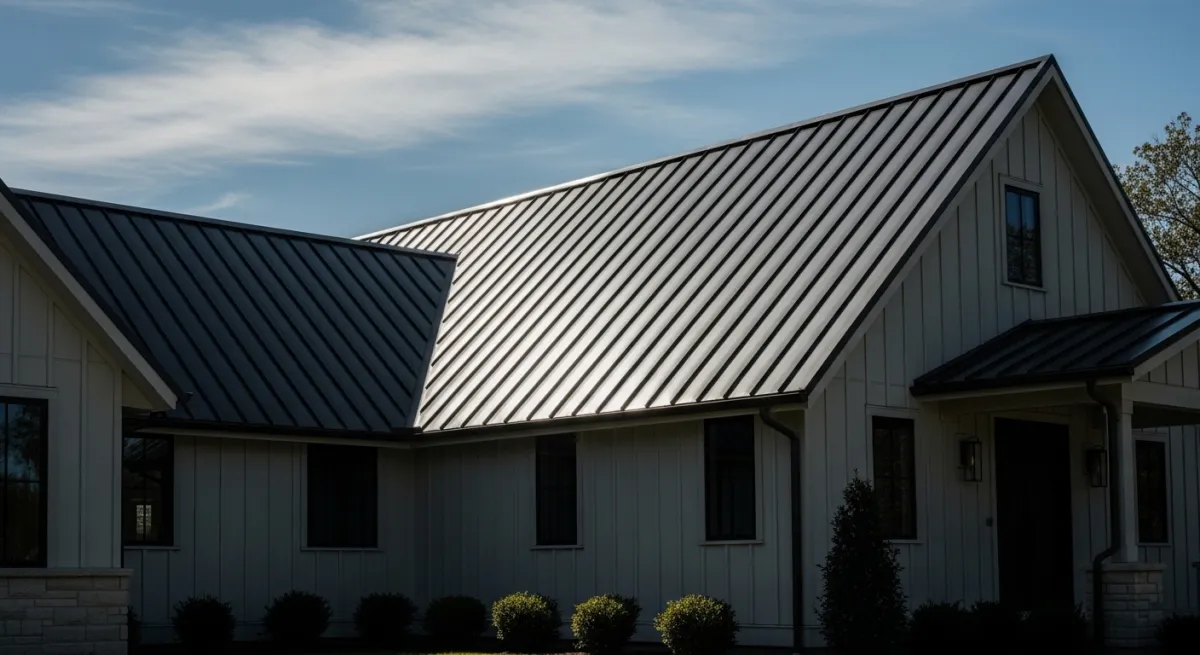
- Standing seam — long vertical panels with raised interlocking seams and concealed fasteners. The premium choice for most modern installations. Clean appearance, excellent watertight performance, and 50–70 year lifespan.
- Corrugated metal — exposed-fastener panels with a wavy profile. The most affordable metal roof option, often used on farmhouse and modern designs.
- Metal shingles — small panels that mimic the appearance of asphalt, wood, or slate while offering metal-grade performance. A good fit for HOA-restricted neighborhoods that prefer a traditional look.
- Stone-coated steel — steel panels coated with natural stone granules to replicate the appearance of clay tile or wood shake at a lower weight and longer lifespan.
Call (888) 217-6517 for a free written estimate from a certified metal roofing contractor.
Get a Free Metal Roof Estimate
(888) 217-6517Certified Metal Roofing Installers · Free Written Quote · Workmanship Warranty
Metal Roof Replacement Cost and ROI
For a 2,000 sq ft home, full metal roof replacement typically runs:
- Corrugated steel: $18,000–$28,000 ($9–$14 per sq ft installed)
- Standing seam metal: $24,000–$40,000 ($12–$20 per sq ft installed)
- Stone-coated steel: $20,000–$32,000 ($10–$16 per sq ft installed)
- Metal shingles: $15,000–$28,000 (varies by product line)
Metal roofs cost roughly 2 to 3 times more than asphalt shingles upfront. Over the full life of the roof, the math often favors metal because of four factors:
1. Energy Savings
Reflective metal roofing can reduce cooling costs by 10–25% in hot climates. The savings are largest in southern states and smallest in northern climates where cooling is a smaller share of total energy use. Some utilities offer rebates for ENERGY STAR-rated cool metal roofing.
2. Insurance Discounts
In hail-prone states (Colorado, Texas, Minnesota, Nebraska, Oklahoma), many insurance carriers offer premium discounts of 10–35% for impact-resistant Class 4 metal roofing. Check with your carrier before installation to confirm the discount applies.
3. One Replacement Instead of Two
Asphalt shingles last 25–30 years; metal lasts 50–70. Over a 50-year window, an asphalt roof typically needs to be replaced twice while a metal roof is replaced once. Comparing total cost over the same time period changes the math significantly.
4. Resale Value
Homes with metal roofs sell for 1–6% more than comparable homes with asphalt roofs, according to multiple resale studies. The premium varies by region and home style.
Typical payback period: 12 to 18 years through combined energy savings, insurance discounts, and avoided shingle replacement, depending on climate and local energy costs. Call (888) 217-6517 for a personalized estimate.
Get a Free Metal Roof Quote
(888) 217-6517Free ROI Analysis · Energy Savings Estimate · Financing Available
"Cooling bills dropped noticeably the first summer after the metal roof went on." — Chris and Sarah P., Austin
Metal Roof Replacement Cost Factors
Beyond the base material cost, several factors affect the final price of a metal roof installation:
- Roof complexity. Standing seam on a complex roof with multiple hips, valleys, and penetrations requires extensive custom trim fabrication, which adds cost. Simple gable roofs are the cheapest layout to install.
- Material gauge. 24-gauge steel (thicker) costs more than 26-gauge but offers better dent resistance. The right gauge depends on your climate and exposure to hail.
- Coating and finish. PVDF (Kynar 500) finishes have 30–40 year color warranties and cost more than standard polyester finishes. Cool roof reflective finishes also add cost but improve energy performance.
- Decking condition. If the existing plywood needs replacement, expect $70–$120 per 4×8 sheet of new sheathing.
- Geographic location. Labor rates vary significantly by region. West Coast and Northeast labor typically runs 20–40% higher than Southeast and Midwest.
See our roof replacement cost guide for a full breakdown by material and region, or call (888) 217-6517 for a free written estimate.
Pros and Cons of Metal Roof Replacement
Metal roofing offers some of the strongest long-term performance of any residential roofing material, but it isn't always the best fit for every home or budget. Here are the main trade-offs.
Advantages
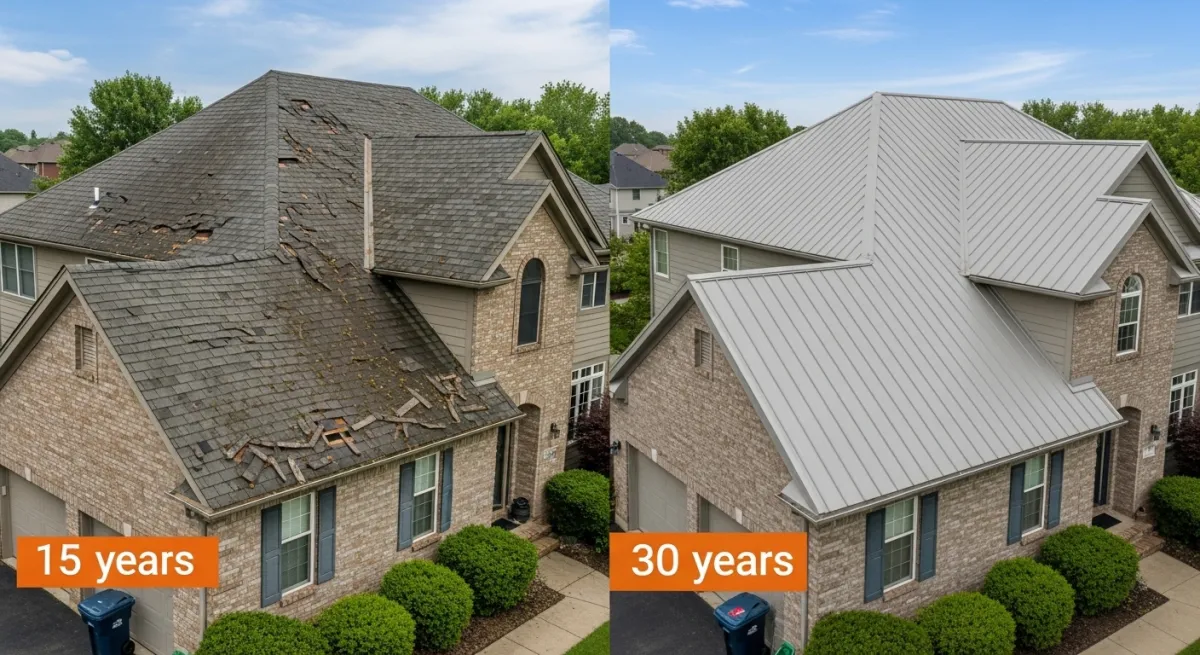
- 40 to 70 year lifespan — 2 to 3 times longer than asphalt shingles, with 40–50 year manufacturer warranties on most premium products.
- Energy efficiency — reflective finishes can cut cooling costs by 10–25% in hot climates.
- Strong wind and fire resistance — Class A fire rating and wind ratings up to 140 mph or higher with proper installation.
- 100% recyclable with 25–95% recycled content, reducing landfill waste at end of life.
- Low maintenance — no granule loss, minimal moss or algae growth, and very few repair needs over the roof's life.
- Insurance discounts — 10–35% premium reductions for Class 4 impact-resistant metal in hail-prone states.
Trade-offs
- Higher upfront cost — 2 to 3 times the initial cost of asphalt shingles.
- Potential for denting — lightweight aluminum and thin-gauge steel can show dents from large hail. Stone-coated steel and 24-gauge standing seam are more dent-resistant.
- Thermal expansion considerations — metal panels expand and contract with temperature, which makes proper fastener selection and clip spacing important. Certified installation matters.
- Specialized installation — fewer contractors are certified for metal compared to asphalt, which can mean longer scheduling lead times in some areas.
- Difficulty matching repairs — color and finish matching for spot repairs years later can be challenging.
Call (888) 217-6517 for a free consultation on whether metal is the right fit for your home.
Talk to a Certified Metal Roofer
(888) 217-6517Free Written Estimate · Manufacturer-Certified Installers · Workmanship Warranty
When Metal Roof Replacement Makes Sense
Metal is a particularly good fit in several situations:
- Long-term homeowners. If you plan to stay in the home for 15+ years, the longer lifespan and energy savings typically justify the higher upfront cost.
- Hot climates. Reflective metal roofs offer the largest energy savings in southern states with high cooling loads.
- Hail-prone regions. Class 4 impact-resistant metal qualifies for insurance discounts in many hail-prone states.
- High-wind and hurricane zones. Properly installed metal roofs handle wind speeds well above asphalt shingle ratings.
- Wildfire-prone areas. Class A fire rating and non-combustible material provides better protection than wood shake or some asphalt products.
- Energy-efficiency-focused homes. Combined with proper attic ventilation and insulation, metal roofs contribute to a more efficient overall building envelope.
Call (888) 217-6517 for a free estimate.
Metal Roof Replacement Process
Metal roof installation requires precision, specialized tools, and certified crews who understand thermal expansion, seam integrity, and proper fastening. A typical project follows the same six steps from initial consultation through final inspection.
Free Metal Roof Consultation
A licensed inspector evaluates your existing roof, the structural condition, and which metal system fits your home, climate, and budget. The consultation takes 30–60 minutes and is provided at no cost.
Precision Measurement and Written Estimate
The contractor takes detailed roof measurements (often using satellite imagery plus on-site verification) and provides a written itemized estimate covering panels, trim, fasteners, underlayment, flashing, labor, permits, and warranty terms.
Material and Color Selection
Choose from standing seam, corrugated, metal shingles, or stone-coated steel in a wide range of colors and finishes. Physical samples can be brought to your home so you can see the color and finish against the existing trim and siding.
Tear-Off and Deck Inspection
The crew removes the existing roofing material, replaces any damaged decking, and installs high-temperature synthetic underlayment designed for metal roof systems.
Metal Roof Installation
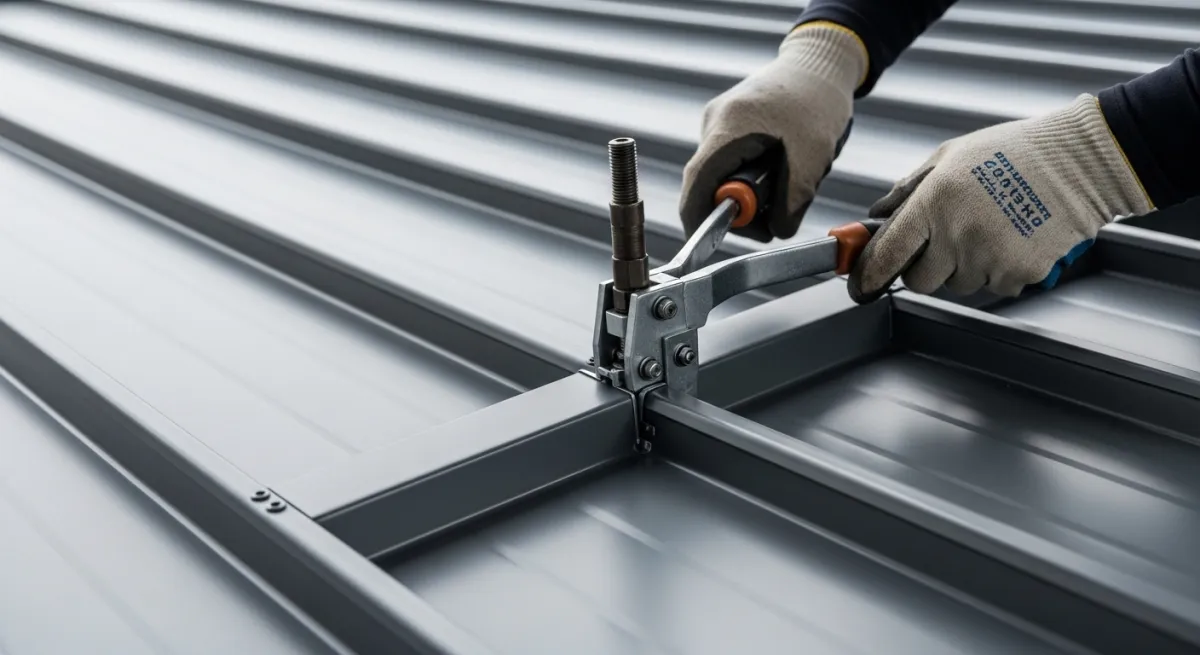
Certified metal roofing crews install the new panels using manufacturer-approved methods — proper panel alignment, engineered clip spacing for thermal expansion, and watertight seaming at every joint and transition.
Custom Trim and Final Inspection
Crews install custom-fabricated trim, ridge caps, valley flashing, and pipe boots, then complete a final quality inspection and walkthrough. Manufacturer warranty registration and the written workmanship warranty are completed before the crew leaves.
Metal Roof Replacement FAQ
How long does a metal roof last?
Metal roofs last 40 to 70 years depending on the material. Standing seam steel and aluminum average 50 to 60 years. Stone-coated steel and corrugated steel last 40 to 60 years. Copper and zinc can last 80 to 100+ years in moderate climates. Metal roofs typically outlast asphalt shingles by 2 to 3 times with minimal maintenance. Call (888) 217-6517 for a free estimate.
Are metal roofs noisy when it rains?
No, when installed properly. Modern metal roofs over solid plywood decking with synthetic underlayment and standard attic insulation are about as quiet as asphalt shingles during rain. The deck, underlayment, and insulation absorb sound effectively. The "noisy metal roof" perception comes from old barn-style installs over open purlins without insulation, which is not how residential metal roofs are installed today. Call (888) 217-6517 for a free consultation.
Can a metal roof be installed over existing shingles?
In some cases, yes — metal roofing can be installed over a single layer of existing asphalt shingles, which saves on tear-off costs. However, most contractors recommend a full tear-off so the decking can be inspected, any rot or damage can be repaired, and the new underlayment can be installed correctly. Local code may also restrict installations over existing shingles. A professional inspection determines whether overlay is appropriate for your specific situation. Call (888) 217-6517 for a free assessment.
How does a metal roof pay for itself?
Metal roofs offer four sources of long-term value: (1) energy savings of 10–25% on cooling costs from reflective finishes, (2) insurance discounts of 10–35% in hail-prone states for impact-resistant metal, (3) one-time replacement vs two shingle replacements over the same 50-year period, and (4) a 1–6% boost in home resale value. Total payback for most homeowners is 12–18 years, depending on climate and energy costs. Call (888) 217-6517 for a personalized ROI estimate.
Get Your Free Metal Roof Estimate
(888) 217-6517Certified Installers · Free Written Quote · Lifetime Warranty Options
"Replaced our 22-year-old shingle roof with standing seam metal. Insurance discount and lower cooling bills made the math work." — Mark and Lisa D., Denver